

When planning a roadmap for legacy API modernization, the focus should be on ensuring data quality through phased decision structures. This includes using automated data profiling to detect anomalies and implementing an Anti-Corruption Layer in Laravel middleware to isolate legacy schema defects. It is crucial to apply explicit go/no-go stage gates per workflow, based on data profiling and validation rules, to c
Essential steps for API modernization
When modernizing legacy APIs, technical feasibility is only part of the story. Ensuring data quality is essential to prevent integration issues. This article covers the strategic considerations and decision criteria needed for a successful transition.
- Identify and address data quality issues such as null values and duplicates before synchronization.
- Use an Anti-Corruption Layer to protect the new domain model from legacy data errors.
- Apply practical data-readiness benchmarks to support release decisions.
- Choose between Clean-at-Source and Clean-in-Transit depending on the desired speed and maintenance burden.
- Implement a phased release to achieve measurable results without a full data cleanup.
Why technical feasibility is not enough for API modernization
An API connection can be technically feasible while the data passing through it is not reliable enough for production. That distinction determines whether modernization merely adds connectivity or actually becomes usable in daily operations. A legacy ERP database with unnormalized text fields, for example, requires substantial extraction and normalization layers in Laravel. With a structured relational source, lighter field mapping may suffice. In both situations, a connection can work, but the meaning, form, and interrelationships of the data impose very different requirements on the transition to a new domain model.
The technical assessment often focuses on whether two systems can exchange data. Before going live, a second question is added: does the data remain usable during that exchange for the workflow being released? When a modern system receives data that does not unambiguously align with its own model, uncertainty shifts from the source system to the new application layer. A translation layer between subsystems with different data models can isolate those structural and semantic differences. That isolation makes the difference visible, but does not automatically change the quality of the source data.
A phased approach therefore often fits better in an environment where source quality varies. New functionality can be released for each specific business process, while legacy and modern components temporarily coexist. This produces a defined outcome sooner, but the temporary coexistence does require explicit design. For a period, the organization then manages both the existing and the modernized way of working. A comprehensive cleanup can reduce structural data debt further, but may delay the delivery of new functionality by months.
The strategic boundary therefore does not lie in whether an API is available. The release decision should be linked to the quality of the data within one selected workflow and to the effort needed to align the source and target models. This keeps visible which uncertainty is temporarily handled in Laravel middleware and which uncertainty must first be removed in the source system.
Sources for this section: microsoft.com, martinfowler.com, tech-stack.com
The impact of poor data quality on legacy-to-API modernization
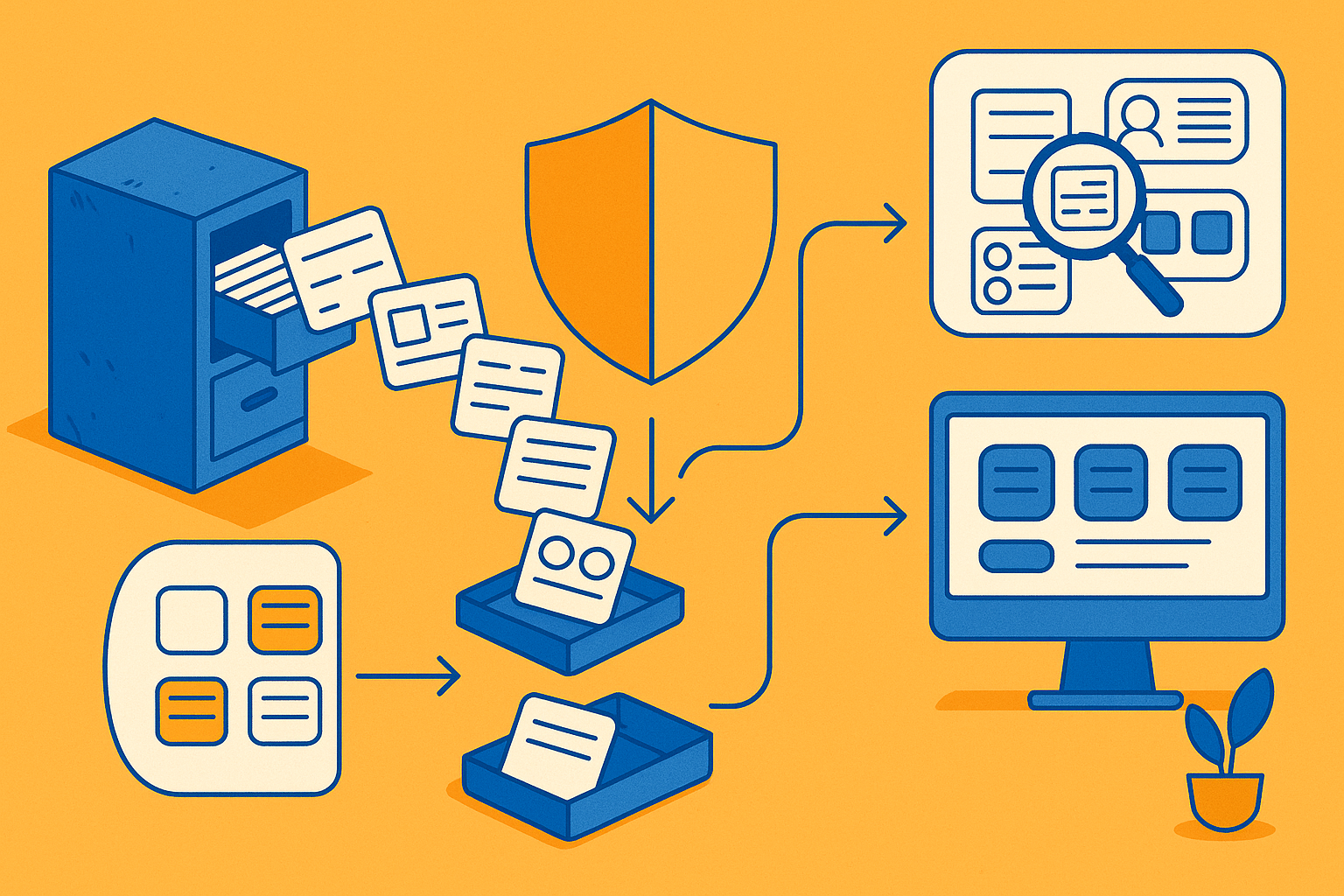
Poor data quality undermines an API integration not because data cannot be sent, but because the receiving application has no reliable basis for working with it. Missing values, inconsistent patterns, and duplicates may already exist in the source system. As soon as this data becomes part of a modern workflow, ambiguities that previously remained within an isolated legacy environment become visible in the new chain. The integration is then technically active, but the outcome per record can vary.
A null value is not merely an empty place in a table. In an integration, it means information is missing where the target application may expect a populated value. Pattern deviations indicate that comparable data has not been recorded in one recognizable format. Duplicates make it unclear whether multiple records represent the same entity. These three signals each have a different cause, but share one operational consequence: a receiving system cannot simply assume that every submitted record has the same meaning and completeness.
An Anti-Corruption Layer in custom Laravel middleware can shield the new domain model from shortcomings in the legacy schema. Data Transfer Objects and explicit mapping transformations define how source data is translated into another form. This protects the new model from direct dependency on the old structure. However, the layer does not remove the fact that a transformation remains based on the available data. When a source record is incomplete, inconsistent, or duplicated, that remains a fact that must be visible in advance before a workflow starts relying on the connection.
Automated data profiling reports make that situation concrete in advance. They reveal null values, pattern deviations, and duplicates before integration development leads to far-reaching assumptions. This shifts the discussion from a general impression that the data is “reasonable” to demonstrable characteristics of the source. Management and operations thereby gain a more realistic view of what an initial API release can and cannot reliably support.
Sources for this section: microsoft.com, piranirisk.com, winpure.com
Critical data quality issues before API synchronization
Before a workflow is allowed into automated synchronization, it must be clear which deviations exist in the source tables. Automated data profiling can detect null values, misuse of free text, and shadow identifiers. These categories require separate assessment because they do not indicate the same problem and do not create the same uncertainty. A profiling report therefore does not provide a judgment on the entire modernization, but a factual basis for determining whether a specific workflow is ready for the next phase.
Null values are an immediate concern when the relevant field is required for the intended exchange. It is not only about the presence of empty data, but whether a record remains usable within the intended flow as a result. The completeness of required information must therefore be visible per entity and per workflow. Without that distinction, an average impression of the data source can conceal that the selected records in particular are insufficiently complete.
Misuse of free text is another type of risk. Data recorded in free text may structurally deviate from the format expected by a new application. This makes its meaning less predictable than for fields with a fixed structure. The issue is therefore not solely whether a value is present, but whether that value is consistent enough to retain the same interpretation in an automated exchange. Profiling reveals where a text field has been used as a substitute for information that requires a fixed place or meaning elsewhere.
Shadow identifiers relate to the question of which record is authoritative in practice. When alternative identifiers circulate alongside an existing identification, uncertainty arises about the relationship between records. This is closely related to an ownership question: without a clear primary identifier, it remains unclear which record the synchronization represents. Duplicates belong in the same assessment because they increase the likelihood that one entity is recognized more than once or not unambiguously.
These findings can serve as phase boundaries: synchronization follows only when the identified deviations are acceptable within the selected workflow. An architecture that separates uncertainties with an Anti-Corruption Layer and strict Data Transfer Objects can help keep legacy uncertainties out of the modern application layer. Dead-letter queues support the isolation of data that cannot be processed safely. The core remains that the deviations must first be identified and measurable; otherwise, there is no substantiated basis for a release decision.
Sources for this section: winpure.com, tech-stack.com
Key decision criteria for API modernization
Practical data-readiness benchmarks provide a concrete starting point for a release decision per entity. They are not a general standard for every organization or data flow, but a useful yardstick for explicitly discussing the quality of required fields and duplicates before automated synchronization begins.
| Decision criterion | What is assessed | Practical benchmark | Meaning for the release |
|---|---|---|---|
| Completeness of required fields | Whether the fields required for an entity are actually populated. This test concerns mandatory information, not all possible fields in the source. | A completeness score of at least 98% for required fields. | The score shows whether the entity is ready for automated synchronization according to this practical benchmark. Below the threshold, there is still a demonstrable amount of missing required information that must be considered in the release decision. |
| Duplicate ratio | How often an entity appears more than once in the data. This criterion assesses the uniqueness of the record, not the substantive correctness of each individual field. | A duplicate ratio below 0.5%. | The ratio indicates whether the likelihood of multiple records within the entity is sufficiently limited for automated synchronization according to this practical benchmark. Above that threshold, the entity requires further assessment before release. |
| Scope of the decision | The measurement is linked to a specific entity being considered for synchronization. This keeps clear what the scores relate to. | The stated values apply as practical data-readiness benchmarks and not as an official platform requirement. | A release decision can be supported by measurable quality values instead of technical connectability alone. The organization can thereby record why an entity does or does not proceed to the next phase. |
Sources for this section: winpure.com
A practical framework for data readiness
A useful framework for data readiness does not begin with the question of which route is always preferable, but with the choice of where an identified quality issue will be addressed. That choice also determines the speed of the initial release, the ongoing responsibility for the data, and the maintenance burden of the integration layer. The steps below make this trade-off explicit for every workflow being considered for modernization.
- 1. Record which data deviation is addressed for each workflow. Distinguish between a problem that must be removed in the legacy source system and a difference that is temporarily translated during exchange. 2. Assess Clean-at-Source. Cleaning up in the source system addresses structural data debt permanently. The source itself thereby becomes more consistent, rather than the deviation being handled only outside the source. On the other hand, this route can delay time to market. When the required cleanup is broad or deeply affects existing data processes, the availability of new functionality moves to a later point in time. 3. Assess Clean-in-Transit. Transformation in API middleware, for example in Laravel, can enable business value faster because processing takes place when data passes through the integration layer. This is not a permanent removal of data debt: the middleware remains responsible for converting the inconsistent source data. The maintenance burden therefore remains as long as the source system retains the same quality or structure. 4. Link the choice to an explicit decision condition. A rapid release is defensible when the organization accepts that the integration layer will take on a continuing task. A structural source improvement fits when limiting that maintenance burden outweighs earlier delivery. 5. Reassess the route when the workflow changes. The chosen treatment is linked to the relationship between time to release and ongoing maintenance burden. If that relationship changes, the original choice between source cleanup and transformation may also need to be reconsidered.
Sources for this section: winpure.com
Frequently asked questions about data readiness and API modernization
The most difficult question around incomplete data is often not whether a record can technically be forwarded, but what form of risk the organization is willing to bear. Strict admission and permissive flow lead to different operational consequences.
- Should incomplete records be rejected immediately?
Strict API gatekeeping rejects incomplete records immediately. This prevents the target system from receiving incomplete data that can pollute the target model. The downside is operational: when a business process depends on those records, rejection can halt the progress of that process. Protection of the target system is then achieved at the cost of an interrupted process flow.
Is permissive flow a safe alternative?
Permissive flow uses fallback values to keep operations moving. This can prevent a process from stopping immediately, but shifts uncertainty to subsequent parts of the chain. Downstream reports can become polluted by those fallback values. Continuity at that moment does not then automatically say anything about the reliability of information later used for reporting.
What criterion determines the choice?
The trade-off lies between two concrete risks: pollution of the target system by incomplete data, or business process disruption when such records are rejected. There is no approach within this choice without consequences. A release decision becomes easier to explain when it is recorded in advance which consequence carries more weight for the relevant workflow: immediate process continuity or keeping incomplete data out.
What does this mean for integration reliability?
Reliability has two dimensions here. An integration can keep operations running while still producing information that makes reports less accurate. Conversely, it can protect the data quality of the target system while blocking a process. Assessing these two outcomes separately prevents “working” from being interpreted solely as “records arrive.”
Sources for this section: winpure.com
Key considerations for successful API modernization
The roadmap becomes manageable when data readiness does not run alongside the project as a general assessment, but as a formal boundary between phases. A Stage-Gate Data Readiness Framework links the release of a workflow to measurable quality thresholds and integrity checks. The outcome is then not merely that development is technically ready, but that predefined conditions have demonstrably been assessed before the workflow goes live.
- Make the go/no-go decision binding for each workflow. A formal phase boundary prevents uncertainty about data quality from being shifted to the point at which the workflow is already in use. Quality thresholds provide a concrete basis for assessment; integrity checks test whether the data within that scope meets the agreed consistency requirements.
Record what the assessment does and does not cover. The check should be linked to the workflow awaiting release. As a result, a positive decision remains limited to the area where the checks were performed. This prevents a judgment about one data flow from being interpreted without justification as clearance for other parts of the legacy landscape.
Use phasing as a management tool for operational risk. The combination of measurable thresholds and an explicit go/no-go status makes visible when uncertain data can have a financial or operational consequence. Going live too early can lead to remediation costs or disruption in execution; a delayed release instead affects the availability of the intended workflow. The phase boundary brings these two types of consequences forward in decision-making.
Maintain control before going live. The framework only becomes meaningful if the outcome actually determines whether a workflow proceeds. A quality check that has no influence on release leaves the same uncertainty in place, but later in the chain and under greater operational pressure. The concrete boundary remains: no go-live for a workflow as long as the established quality thresholds and integrity checks do not justify a go.
Sources for this section: winpure.com, tech-stack.com
