

To scale AI solutions within an organisation without overloading existing systems, separate AI processing from transactional core systems. Asynchronous task queues and separate AI services ensure that intensive tasks are processed outside the primary workflow. In addition, limit write permissions, document access rights carefully and test the integration first in a controlled environment. This allows AI capacity to grow without jeopardising the stability of critical business processes.
Scaling AI without system overload
A scalable AI integration starts with a clear separation between the primary business process and additional AI processing. The architecture must not only be able to absorb capacity, but also prevent errors, delays or incorrect outcomes from directly affecting existing systems.
- Use asynchronous task queues for AI tasks that do not require an immediate response.
- Place AI integrations in separate services so that disruptions remain limited to the AI layer.
- Limit access to business data through clear authorisations and segregated roles.
- Test the selected integration and acceptance criteria first in a controlled Proof of Concept environment.
Key architectural choices for scaling AI
In organisations with legacy systems, it is advisable not to let intensive AI processes compete with transactional core systems. Asynchronous task queues provide a useful separation for this purpose: AI inference and data enrichment are placed in a queue as jobs and processed by separate workers. The core application then does not have to wait for an AI outcome, as long as the business action does not require an immediate AI response. During peak loads, only the processing capacity of these workers can be expanded, without the transactional layer having to carry the same load.
Microservices form a second architectural boundary. By positioning AI functionality as a separate service, performance problems or disruptions in the AI layer remain better isolated from the core application. This requires management of the connection, error handling and version differences between systems, but prevents the existing application from becoming fully dependent on a single AI component. For legacy environments, this enables phased implementation: the AI service runs alongside the monolith instead of becoming a direct part of it.
The data boundary also deserves attention. When AI components use sensitive business data, for example through semantic search layers, authorisations in the AI layer must align with those of the source system. Row-Level Security (RLS) or a comparable separation can help prevent search results from displaying data that an employee is not permitted to view in the source application. This limits security risks and is relevant when personal data is processed under the GDPR. Defining access rights is therefore part of the same design choice as isolating the AI workload.
How to scale AI safely without system overload
In addition to capacity distribution, the path from an AI outcome to a business change is decisive. A separate AI service does not protect the core application if that service can independently make changes outside the existing business rules. Therefore, keep the distinction between reading, assessing and modifying explicit: AI can provide a proposal or analysis, while the core application retains validation and processing of a final change.
Direct database write permissions for an autonomous AI component increase the risk of incorrect changes. When input is interpreted incorrectly and API or business rules are bypassed, incorrect changes to a central inventory administration, for example, can affect inventory counts and invoicing. As usage grows, so does the potential scale of such errors.
Therefore, define which actions the AI component may perform, which changes require human review and which must always go through the existing application layer. An audit trail and data lineage make it visible which source data was used, which AI outcome was produced and how a change was ultimately processed. This supports the investigation of deviations without turning the AI component into a second, unmanaged entry point to business data.
This approach aligns with an incremental strategy for legacy systems: AI functionality is positioned alongside the existing environment, while the existing application remains leading in the primary process.
Problems when scaling AI solutions
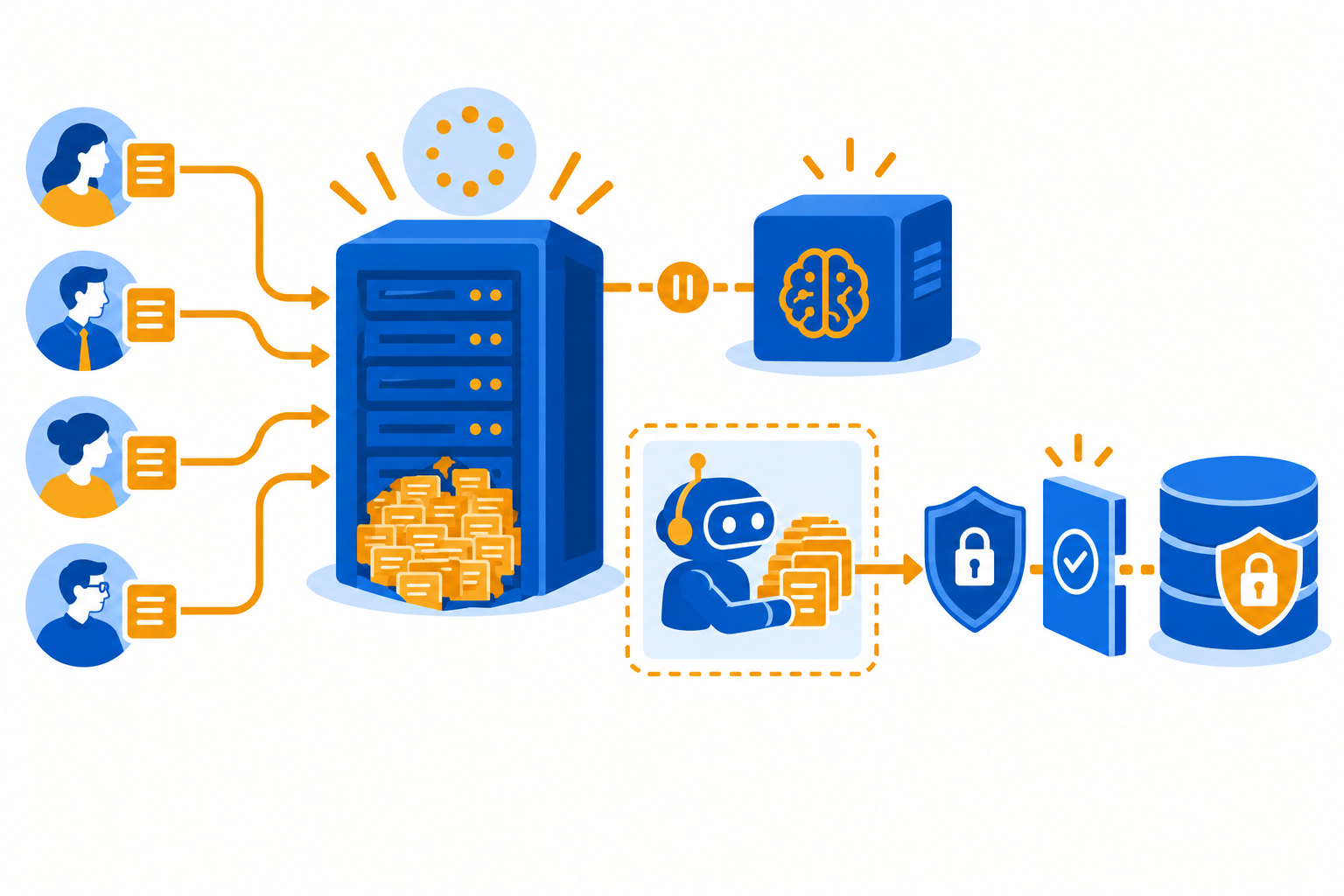
Even with a separated architecture, problems can arise when operational conditions are missing. For example, a queue does not prevent a backlog if inflow is structurally greater than the available processing capacity. Without insight into waiting times, error messages and failed jobs, a delay may only become visible when users notice that results are not arriving. Monitoring lead time, error handling and capacity is therefore necessary to scale before the backlog affects the business process.
A second point of attention is ownership. AI integrations often involve several teams: the team that manages the source system, the team that maintains the AI service and the process owner who uses the outcomes. If it is unclear who investigates an error, rolls back an integration or assesses a changed business rule, a technical separation remains insufficient. Therefore, define responsibilities and the fallback route before the application is used more broadly.
A controlled Proof of Concept provides room to test these points using your own business data. Determine in advance which outcomes are acceptable, what processing time fits the process and when a result must not be used automatically. The PoC therefore makes visible not only the quality of AI outcomes, but also whether the selected integration, management arrangements and access boundaries are suitable for further scaling.
Practical applications for safe AI scaling
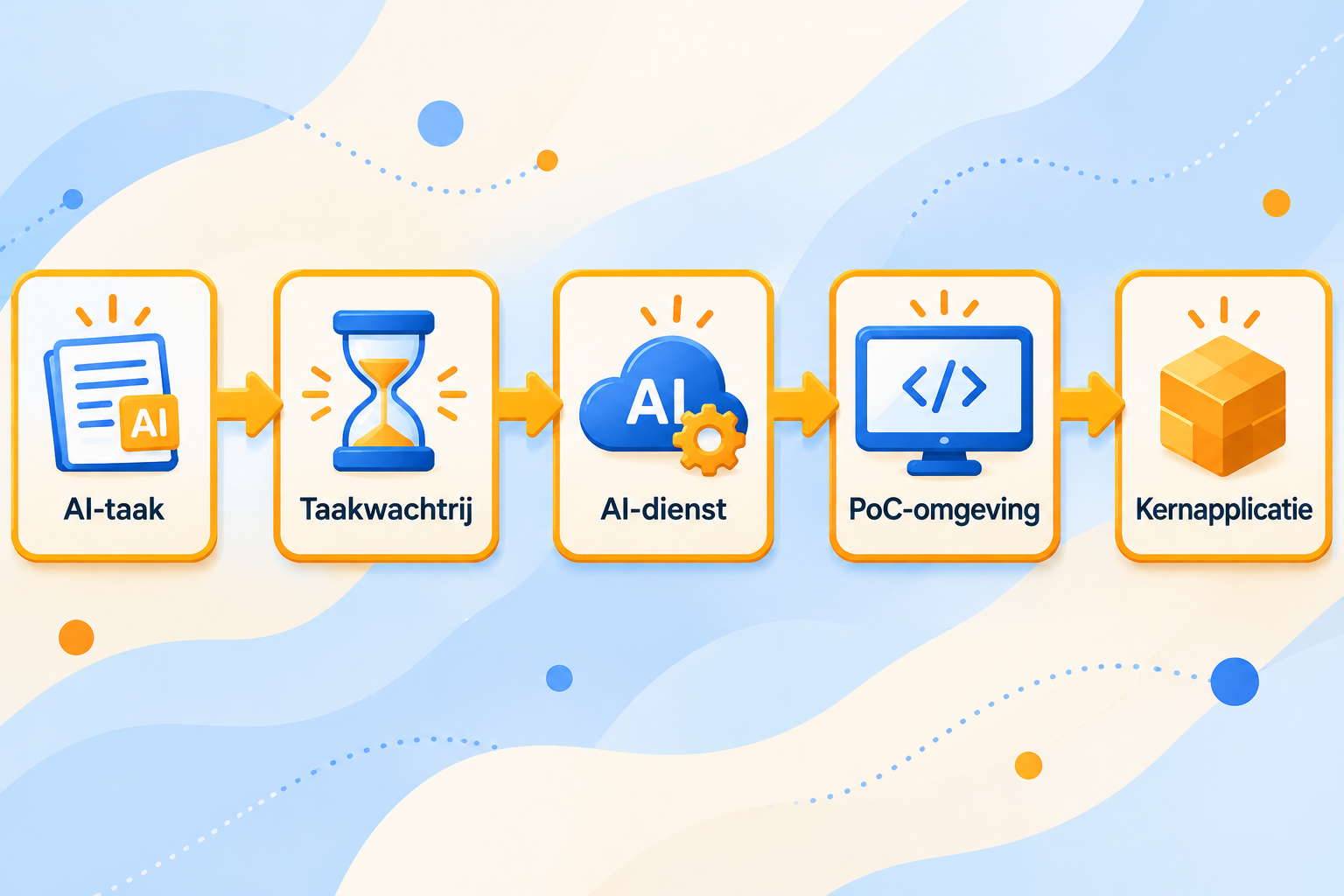
For document processing, analyses or classification tasks, the core application can submit a job to the asynchronous processing layer. The user can continue with the primary process while the AI service processes the result as soon as capacity is available. The result is then returned to the existing application as a proposal, enrichment or status, rather than being written directly into source tables.
For processes with business impact, a review step is appropriate. For example, the AI service can submit a proposed change, after which the core application checks whether required data is present, authorisations are correct and existing business rules are followed. This ensures that the software managing the process also remains responsible for final processing.
In addition, make clear for each data flow which source data the AI service receives, where results are stored and who may view those results. This data lineage helps investigate anomalous outcomes and manage access rights. Combined with an audit trail, this creates a manageable scaling path: AI capacity can be expanded while changes and access remain controllable.
Key considerations for scaling AI
The quality of a scaling journey is demonstrated less by whether AI can be connected technically than by the rationale for the boundary between the new application and the existing operation. That rationale starts before development and integration, with an analysis of the dependencies that determine where load, data and business logic converge.
- An analysis of database and API dependencies reveals which integrations the AI application affects and where an additional processing path can influence the existing operation. Use this analysis to establish which tasks can run outside the transactional core, what data the AI service actually needs and through which application layer changes are returned. Also verify that authorisations from the source system are consistently passed on to the AI layer. The PoC results can then be used to finalise capacity limits, responsibilities and acceptance criteria. Without insight into these dependencies, an expansion can cause costs or disruptions in the core operation while the AI application itself appears to keep functioning.